


A move to Toronto goes well when you settle four things early: your budget, your neighbourhood, your building’s move-in rules and a guaranteed price for the move itself. Do those in that order, start about three months out, and most of the stress goes away. This guide walks you through each one, with official numbers where they exist. Ferguson Moving & Storage surveys your job, puts the guaranteed price in writing before we start, and lets you watch your truck on a live map.
Key Takeaways
- Start three months ahead. Budget for rent first, because housing sets every other choice.
- Pick your neighbourhood by commute and transit, not by square footage alone.
- Ask your building about the service elevator and the booking window before you set a move date.
- Ask for a written guaranteed price after a survey. Know whether it is flat rate (fixed total) or hourly (fixed rate, total depends on hours).
- Plan your first week: short-term housing, health records, transit and a few local services.
Table of Contents
- Build your timeline: 12 weeks to move day
- What Toronto rent looks like
- How to choose a neighbourhood
- Getting around: the TTC, GO and your car
- Work and settling in
- Planning the move itself
- Moving from far away
- Mistakes to avoid
- Your move, with a guaranteed price
- Our view: why the survey comes first
- FAQ
- Sources
Build your timeline: 12 weeks to move day
The City of Toronto publishes a Before You Arrive checklist. It is written for people coming from abroad, but its core advice works for anyone. Save enough to cover rent, food, clothing and transportation for up to six months. Arrange short-term housing for the first few nights. Bring your health records.
Here is a timeline that turns that advice into dates.
| When | What to do |
|---|---|
| 12 weeks out | Set your budget. Decide how much rent you can carry. Start researching neighbourhoods. |
| 10 weeks out | Visit if you can. Walk the streets at rush hour. Test the commute. |
| 8 weeks out | Sign your lease or finish your purchase. Ask the building about move-in rules. |
| 6 weeks out | Book a survey for your move. Decide what to sell, donate or store. |
| 4 weeks out | Confirm your date. Start packing rooms you use least. |
| 2 weeks out | Update your address. Book the service elevator window. Pack a first-night bag. |
| Move week | Check the truck on the map. Keep documents and medication with you. |
If your move falls in winter, give yourself extra room. Snow and ice slow loading, and some buildings limit move hours. Our guide to preparing your home for sale during a winter move in Toronto covers the practical side.
What Toronto rent looks like
Housing is the biggest line in your budget. Canada Mortgage and Housing Corporation (CMHC), the federal housing agency, publishes rental data every year. Its October 2025 rental market statistics for the Toronto area show a median rent of $1,917 across the region and a vacancy rate of 3.0%. Those figures cover purpose-built rental buildings, and CMHC updates them each year.
The same table shows how much the zone matters:
| Zone | Median rent (October 2025) |
|---|---|
| Central Toronto | $2,163 |
| Citywide median | $1,917 |
| East Toronto | $1,685 |
| Etobicoke (South) | $1,630 |
That is a gap of more than $500 a month between the highest and lowest zones. Treat these as a starting point. A unit you find today may rent for more or less, so check current listings against the CMHC table before you commit.
A common rule of thumb is to keep housing near 30% of your gross income. If your rent target looks out of reach in your first-choice area, look one or two subway stops farther out before you look at a smaller unit. A shorter commute often matters more than extra space.
How to choose a neighbourhood
Start with three questions.
- Where do you work, and what is the longest commute you will accept?
- Do you need a car, or will transit do?
- What do you need within a short walk: groceries, a school, a park, a clinic?
A place that looks close on a map can be a long walk in real life, so visit before you sign. Go on a weekday morning and again in the evening. Ride the route you would take to work.
Match the area to your commute
Downtown workers usually do best near a subway, GO Train or streetcar line. North York suits people who need highway access to the north. Etobicoke works well for west-end routes. Scarborough and the East End suit people who commute east or use GO. If you work in the Financial District, neighbourhoods linked to the PATH (the underground walkway network) let you stay indoors on cold winter days.
Match the building to your life
Condos suit people who want walkability and fewer chores. Townhomes and semi-detached houses give families more room. Detached houses give the most space and usually cost more in budget or commute time. If you are downsizing or leaving a family home, our storage services can hold what does not fit while you decide what to keep.
If you are bringing a pet, read our guide to moving downtown with pets before you pick a building.
Getting around: the TTC, GO and your car
The City of Toronto’s getting around page lays out the basics. Toronto’s transit network spans about 1,200 km of routes. On the Toronto Transit Commission (TTC), you tap a debit card, credit card or mobile wallet when you board. The fare on that page is $3.30, and you do not tap out. Subways and streetcars run from 6 a.m. to 2 a.m. Monday to Saturday and from 8 a.m. on Sundays. Blue Night buses cover most major routes after the subway closes.
GO Transit serves Toronto and the surrounding region. The UP Express links Pearson Airport and Union Station in 28 minutes. Fares and passes change, so check the TTC and City of Toronto pages for the current system before you budget.
If you plan to keep a car, ask three things before you sign a lease. Does the unit include parking? What does it cost each month? Does your area allow street parking? Car insurance, parking and fuel add up quickly in the city, so many people living near a subway line find they need one car or none.
Work and settling in
If you are moving for a job within Canada, you may already have a start date. If you are moving to look for work, or if you are new to Canada, the City of Toronto’s newcomer job seeker page explains the main rules. Regulated professions such as medicine, nursing, engineering, accounting and teaching need registration or certification to work in Ontario. The province funds a service that assesses international credentials. The page also suggests translating your resume and documents into English.
If you move from another province in a regulated field, contact your professional body early. Licensing can take time, and it is easier to start before you arrive.
Once you land, the City’s Newcomer Services Kiosks offer free, confidential help with housing, employment, healthcare and education. They serve all residents regardless of immigration status, in person or by video appointment.
Your first-week list
- Pack a bag with documents, medication, chargers, a change of clothes and basic toiletries.
- Carry your health records with you, not on the truck.
- Arrange utilities and internet so they start on move-in day.
- Update your address with your bank, employer and government bodies.
- Check the garbage, recycling and green-bin schedule for your street.
- Look into tenant or home insurance. Many landlords ask for it.
- If you are moving from another province, check how your health coverage transfers so you have no gap.
Planning the move itself
This is where most of the cost and worry sits. Here is how to approach each step, and where our crews take work off your hands.
Step 1: Get a survey before you get a number
A price given without seeing your home is a guess. Toronto homes vary a lot: a two-bedroom condo with a short hallway moves differently from a three-storey house with a long driveway. We survey the job first, in person or by video, and we never give a price before a survey. That is how the guaranteed price stays the price.
Step 2: Know what kind of price you are getting
There are two shapes of guaranteed price, and we keep them separate.
- Flat rate: the total is fixed. You know what you will pay before we start.
- Hourly: the rate and terms are fixed, and the total depends on the hours the move takes.
When you compare options from any company, ask which shape each one is. Make sure the price is in writing and that it says what is included.
Step 3: Understand your protection
The industry standard for valuation protection is 60 cents per pound. Ours is valuation protection up to $6 per pound as standard. It is valuation protection, not insurance, and it is not a flat $6 per pound. Ask us how it applies to your high-value items before moving day. If you own jewellery, art or other irreplaceable items, tell us during the survey so we can plan for them.
Step 4: Plan the building
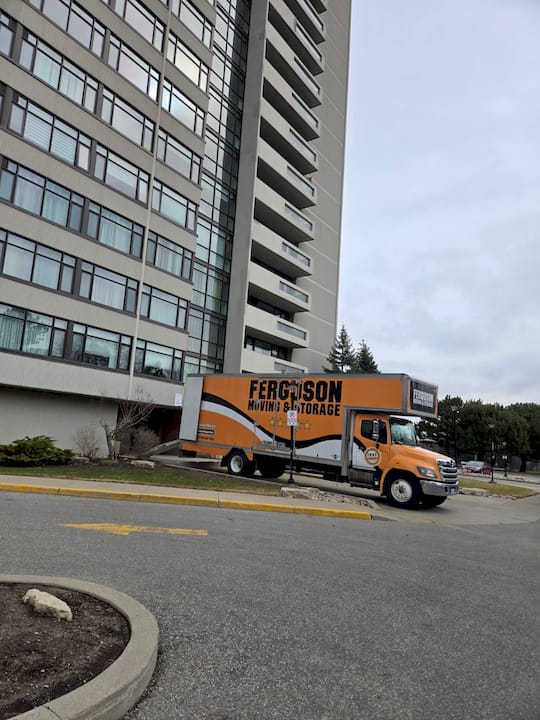
Most Toronto condos and apartment towers have rules about move-in. You usually need to book the service elevator, pay a deposit and keep to a set window. We do not book service elevators for you. We tell you the window to reserve, so you can book it with your property manager once your date is set. Do this early, because popular dates at month end fill up.
Also check where the truck can park, whether there is a loading dock and how tall the entrance is. Tell us what you learn during the survey.
Step 5: Decide what to pack yourself
Packing takes longer than most people expect. If you want help, we offer packing services and sell boxes and materials in our moving supplies shop. If you pack yourself, start with the rooms you use least. Label every box by room and write “fragile” on the sides, not just the top.
Step 6: Watch moving day
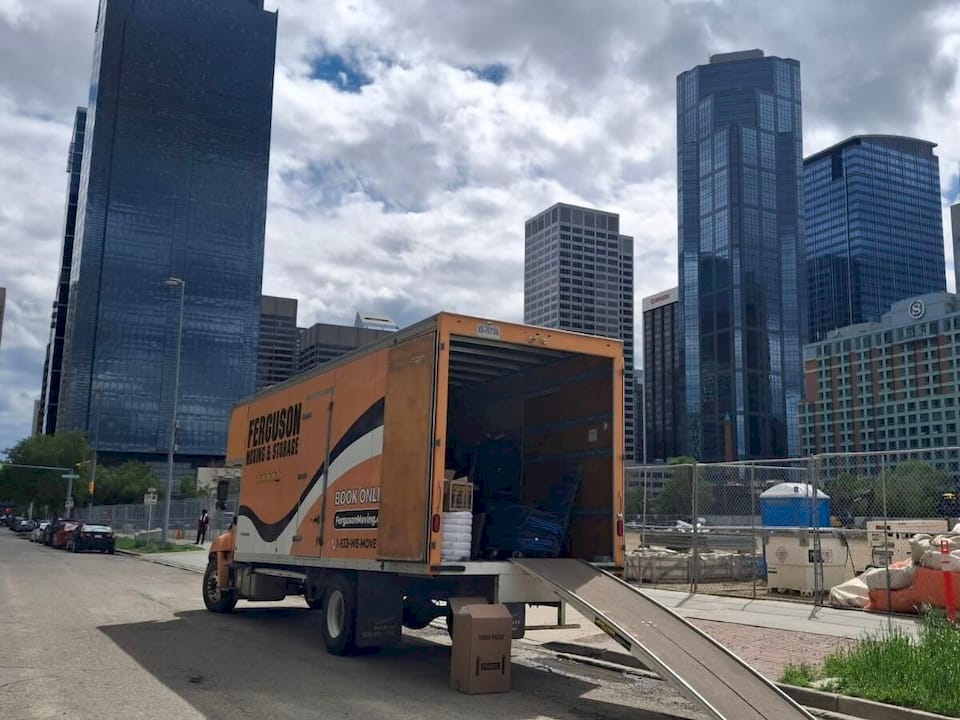
Live GPS tracking is included on every move, so you can see where your truck is. Our crews are our own employees, driving our own trucks. If something goes wrong, a person is accountable. There is no piano surcharge.
Moving from far away
For long distance moves, we offer two options and explain both.
- Ferguson-hauled: a guaranteed flat rate with our own dedicated crew and truck, a dedicated shipment and an exact scheduled delivery date.
- Great Canadian Van Lines: we act as a van line agent. The price is based on scaled weight and distance, typically about 20 percent less, with a delivery window of 3 to 7 days.
The first suits you if your date is fixed, for example if a lease or job start depends on it. The second suits you if you have flexibility and want to lower the cost. Our guide to long-distance moving to Toronto walks through planning a cross-country move.
Mistakes to avoid
- Setting a date before you know the building’s rules. Confirm the elevator window first.
- Choosing a neighbourhood from a map. Visit it at rush hour.
- Skipping the budget. Rent is only part of the cost. Utilities, transit and food add up.
- Leaving health coverage to the last minute. Check how your coverage transfers well before the move.
- Falling for a price that sounds too good. In winter especially, read our advice on avoiding moving scams in Toronto. Our list of common mistakes when moving to Toronto goes further.
Your move, with a guaranteed price
We have been moving Canadians since 1916 and serve households and businesses across British Columbia, Alberta and Ontario. For a Toronto move, we survey the job, put the price in writing before we start and track your truck live. Local, long distance, condo and apartment moves, and moves for older customers and estates, are all part of our residential moving work.

If you also need to move an office or a practice, our commercial moving team handles that too. Ready to plan? Get a guaranteed price.
Our view: why the survey comes first
Most people who call us about a Toronto move are stressed about two things: a price that changes and a crew they cannot account for. Both are fair worries.
We deal with the first by looking at the job before we price it. We survey, we put the guaranteed price in writing and we tell you plainly whether it is flat rate or hourly. Flat rate means the total is fixed. Hourly means the rate and terms are fixed and the total depends on the hours.
We deal with the second by using our own employees in our own trucks. When you can see the truck on a map and name the person responsible, moving day feels very different.
Toronto adds its own details: elevator windows, tight loading zones, winter weather. We tell you the window to reserve and plan around the rest. Whatever your budget and your timeline, start with the survey.
Lorne MacInnes
FAQ
How early should I start planning a move to Toronto?
Start about three months ahead. That gives you time to set a budget, choose a neighbourhood, sign a lease and book a survey. Book your elevator window as soon as your date is set.
How much rent should I plan for in Toronto?
CMHC’s October 2025 data shows a regional median of $1,917, ranging from $1,630 in South Etobicoke to $2,163 in Central Toronto. Check current listings against the live CMHC table, since rents change each year. Aim to keep rent around 30% of your gross income.
Do I need a car in Toronto?
Not always. If you live near a subway or GO line and work along it, transit often covers your needs. If you commute across the city or need to reach places the network serves less well, a car helps, but ask about parking before you sign.
Who books the service elevator for my move?
You do, through your property manager. We do not book service elevators. We tell you the window to reserve, based on the survey, so your booking matches the time the crew needs.
Does Ferguson charge extra for a piano?
No. There is no piano surcharge. Tell us about the piano during the survey so the crew plans for it.
Moving Torontonians since 1916.
Sources
- Before You Arrive, City of Toronto
- Getting around, City of Toronto
- Newcomer job seekers, City of Toronto
- Newcomer Services Kiosks, City of Toronto