

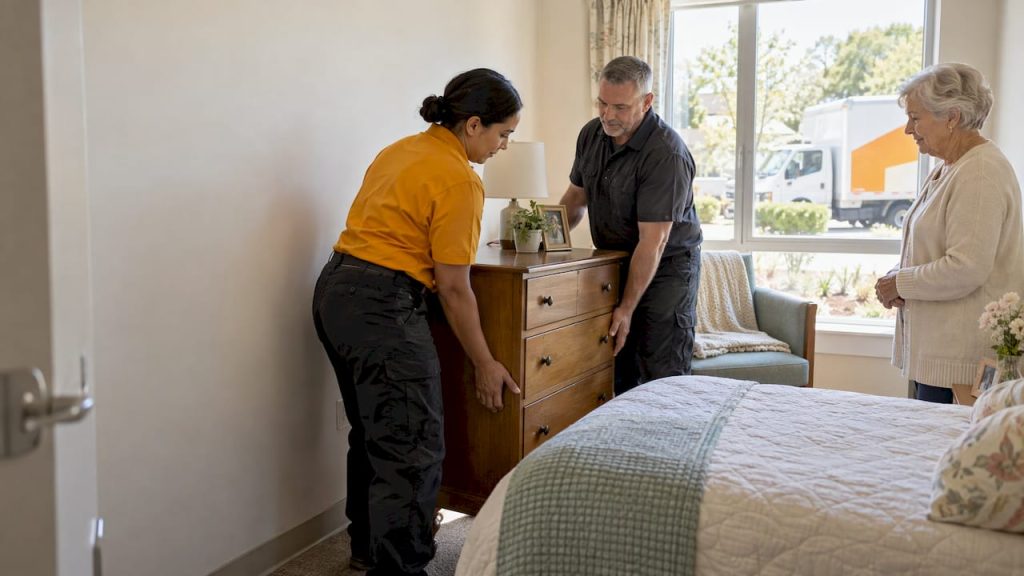
A move to assisted living goes best when you start early, learn the residence’s move-in rules in writing, and keep the day itself simple and calm. This guide walks you through the steps in order: the assessment, the rules in your province, downsizing, the conversation with a parent who is unsure, and the move day. We have been moving Canadians since 1916, and we explain this the way we would to a family member who is tired and worried.
TL;DR
- Start planning as early as you can. Many families need several months to assess care needs, tour residences, sort belongings and book the move.
- Rules differ by province. In BC, Alberta and Ontario the way you apply, who assesses care needs and what the residence must tell you about costs are not the same.
- Ask the residence for its move-in rules in writing: move-in times, furniture it provides, and how to reserve the service elevator.
- Downsize room by room and begin with the easy spaces. Leave photos and heirlooms for later.
- A moving crew can pack, move and set up the room. Book a free survey so the price is in writing before anything starts.
Table of Contents
- Start with the assessment and the right type of residence
- What the rules look like in BC, Alberta and Ontario
- A realistic timeline
- How to talk with a parent who does not want to move
- Downsizing without the pressure
- What to ask the residence before you book a mover
- What a moving crew does for an assisted living move
- Perspective: why the crew matters more than the truck
- Move day and the first week
- Moving into assisted living with Ferguson
- FAQ
- Sources
Start with the assessment and the right type of residence
Before you pick a residence, find out what level of care your parent needs. A senior who needs help with meals and medication is in a different place from one who needs daily personal care. A public health body in Quebec, Santé Montérégie, advises that a senior should look at health, level of autonomy and finances first, so the type of residence fits the person. It also says seniors going through the public sector should have support and accompaniment throughout, and that services must stay in place at home while they wait for a new place.
That last point matters. Waiting lists are real, and your parent still needs to be safe at home in the meantime. Talk to the family doctor or a local health authority care coordinator early, even if you are not sure the move is needed yet.
What the rules look like in BC, Alberta and Ontario
“Assisted living” does not mean the same thing across Canada. The name, the funding and the paperwork change with the province. Here is what to know in the three provinces we serve.
British Columbia
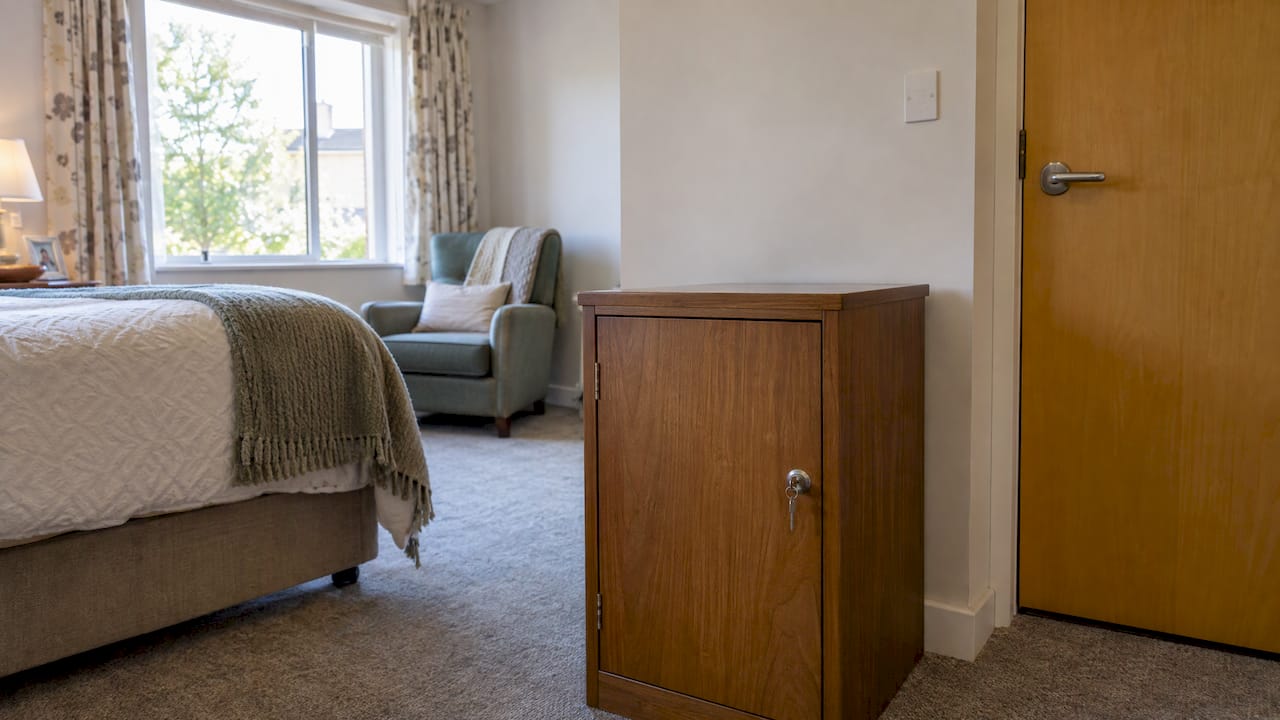
BC’s Assisted Living Regulation sets three classes of assisted living residence: Mental Health, Seniors and Persons with Disabilities, and Supportive Recovery. For the seniors class, each unit must have a bedroom with a door and a window. Residents can lock their own unit, and each unit must have a lockable device for storing money and personal property.
This helps you plan what to bring. You will have a private, lockable room, so pack the small valuables your parent wants close, and plan to use the lockable storage for them.
Alberta
In Alberta, the first step toward a continuing care home is a meeting with an Assisted Living Alberta case manager. According to Alberta Health Services, the case manager completes an assessment that covers physical function, mental health, social needs and finances.
Two more facts from the Alberta Health Services guide to accessing continuing care help with budgeting and packing:
- Health care services in continuing care homes are publicly funded, but residents pay an accommodation charge that covers rent, meals, housekeeping and routine building maintenance.
- Some homes may require residents to bring their own bed, mattress and furniture. The guide also notes that moving costs can be significant and belong in your plan.
Ask the home about furniture before you buy, donate or move anything large.
Ontario
In Ontario, licensed retirement homes fall under the Retirement Homes Act, 2010. A retirement home is defined there as a residence mainly for people 65 or older, where the operator makes at least two care services available.
The Retirement Homes Regulatory Authority explains what you can expect: a clear price list for accommodation, care services and extras, and 90 days’ written notice of cost increases and changes. Ask for that price list before you sign, and keep it with your moving papers.
A realistic timeline
The sources we checked agree on one thing: more time means better choices. Exact timelines vary with the family, the waiting list and the health of your parent, so treat the schedule below as our practical suggestion, not a rule.
| When | What to do |
|---|---|
| 3 to 6 months before | Get the care assessment. Tour two or three residences. Ask for move-in rules and the price list in writing. Start the downsizing conversation. |
| 6 to 10 weeks before | Confirm the move-in date. Decide what goes, what stays and what goes to storage. Book a survey with your mover. |
| 3 to 4 weeks before | Pack the rooms your parent uses least. Arrange address changes. Confirm the elevator booking with the residence. |
| The week before | Pack daily items last. Label every box by room and by who it is for. Confirm the arrival time with the crew. |
| Move day | One family member stays with your parent. The crew sets up the bed, photos and familiar items first. |
If you have less time, do not skip the visit step. Your parent should see the residence, eat a meal in the dining room and meet staff before the move. CareCompare is one guide that suggests the same, but any residence will gladly arrange it.
How to talk with a parent who does not want to move
This is often the hardest part. A few approaches help.
- Start with their goals, not your worries. Ask what they want more of: less housework, more company, no stairs. Then show how a residence could deliver that.
- Talk about safety as shared planning. Use a specific event, such as a fall or a missed medication, and ask what would make them feel safer.
- Offer visits, not decisions. A tour and a lunch ask for nothing. Let them say what they liked and what they did not.
- Keep their choices in their hands. Let them pick the room, the chair, the photos. Small decisions give back a feeling of control.
- Bring in a neutral person. A family doctor, a care coordinator or a trusted friend can say what you cannot.
- Give it time. Several short talks work better than one big one.
If your parent has memory loss or the situation is urgent, speak with their doctor or the local care coordinator about the right pace and how to handle the conversation.
Downsizing without the pressure
Most seniors moving to assisted living go from a full house to one room or a small suite. That is a lot to sort. The work is easier when you break it into steps.
- Measure the new room. Ask the residence for a floor plan and the size of the closet. Mark where the bed, chair and dresser will go.
- Sort into four piles. Keep, donate, store or give to family. Elder Care Alliance, a Canadian senior care group, suggests this four-category approach.
- Begin with low-stakes rooms. Extra linens, duplicate kitchen items and the garage come first. Photos and heirlooms come last, when your parent is warmed up and not tired.
- Sort in short sessions. Two hours with a break is better than a full day that ends in tears.
- Decide what to store. Items your parent cannot place yet, or furniture that may be wanted later, can go into storage instead of forcing a quick decision.
For more on this, see our guide with 5 moving tips for downsizing your home. If your parent is keeping a home or selling it after the move, our page on moving as a retiree in Vancouver covers more of the practical side. When the new home needs an accessible entrance or layout, moving into accessible housing has details worth reading.
What to ask the residence before you book a mover
The residence sets the rules for move day, and a crew can only plan around what you tell them. Ask for the answers in writing:
- What time can the move happen, and for how long?
- Is there a service elevator, and how do you reserve it?
- Where can the truck park or unload?
- What furniture does the room come with, and what is not allowed?
- Are there limits on the size of furniture, or on items like a hospital-style bed?
- How are medications handled on the first day?
- Who is the contact person on move day?
We do not book service elevators for you. We tell you the window to reserve, based on the survey, so you can ask the residence for the right block of time. Booking too short a window is the most common reason a move runs late.

What a moving crew does for an assisted living move
A good move for a senior is not about speed. It is about order and respect. Here is what we do.
- Survey first. We look at the current home, the new room and the access at both ends. We put the guaranteed price in writing before we start. We never give a price before a survey.
- Packing, if you want it. Our packing services cover as much or as little as your family wants. Our packing steps help if you pack some rooms yourselves.
- Room-first loading. The things your parent needs first, such as bed, lamp, photos and a favourite chair, load last so they come off first.
- Set-up. The crew puts furniture where the floor plan says and can place the bed first, so your parent has a familiar space within the first hour.
- Tracking. Live GPS tracking is included on every move, so family members who cannot be there can see where the truck is on a map.
- No piano surcharge. If a piano is coming along, there is no extra fee for it.
Our crews are our own employees, driving our own trucks. We do not subcontract moves. If something goes wrong, a person is accountable, and you know who to call.
Flat rate or hourly
We give a guaranteed price in one of two forms. A flat rate means the total is fixed. Hourly means the rate and terms are fixed, and the total depends on the hours the move takes. We tell you which one applies to your move at the survey. Many assisted living moves are small, since the new room is small, and the survey tells us which form fits.
Protecting belongings
Valuation protection up to $6 per pound is standard on our moves. The industry standard is 60 cents per pound. This is valuation protection, not insurance, and it is not a flat $6 per pound. Ask us how it applies to your belongings when we do the survey.
If the move crosses provinces
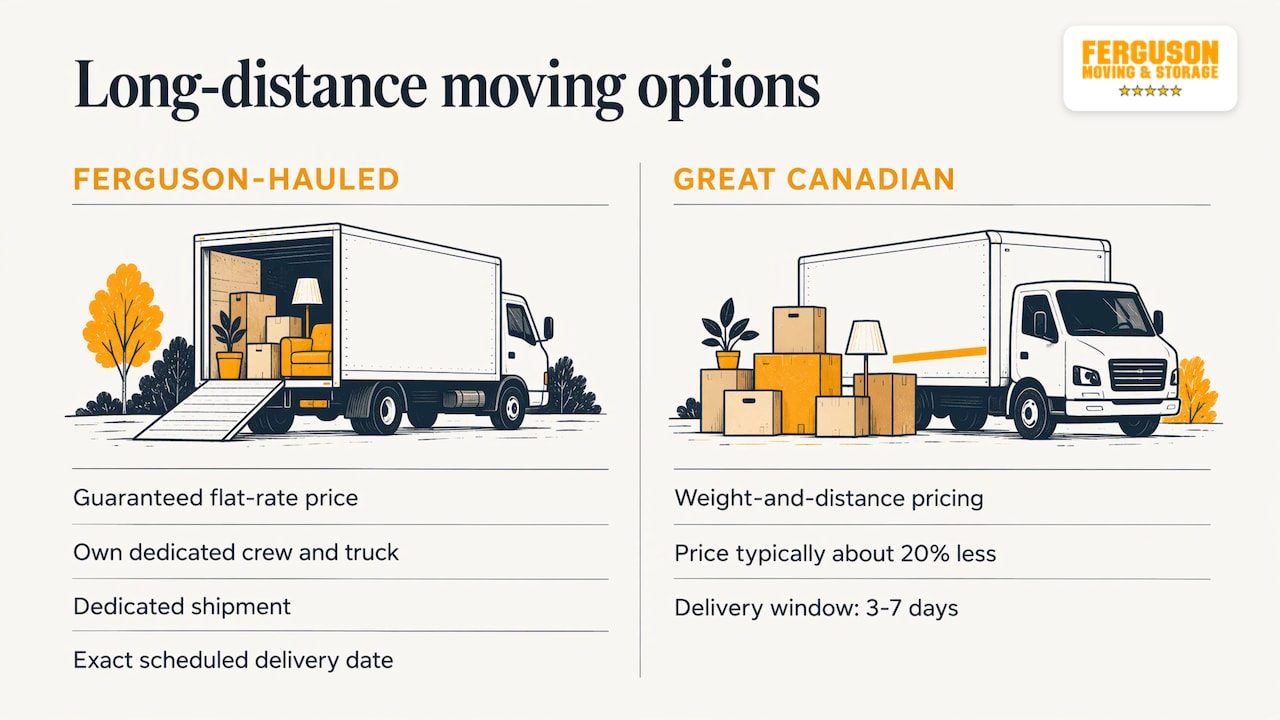
Some families move a parent closer to them in another province. For long distance, we present two options. Ferguson-hauled is a guaranteed flat rate with our own dedicated crew and truck, a dedicated shipment, and an exact scheduled delivery date. Great Canadian Van Lines, where we act as a van line agent, is priced on scaled weight and distance, typically about 20 percent less, with a delivery window of 3 to 7 days. Our long distance moving checklist helps you decide which option suits your family.
Perspective: why the crew matters more than the truck
Over the years, we have moved many people into smaller homes and care residences. The boxes are never the hard part. The hard part is that a person is leaving a home full of memory, and everyone in the family is watching how it goes.
We believe the move should remove as many worries as it can. That means a price in writing before we start, and a crew you can account for. Our crews are our employees, in our trucks, and they know the day is about your parent as much as the furniture.
We also tell families to plan the first hour in the new room before anything else. Bed made, photos on the dresser, lamp plugged in. A room that looks like home by lunchtime changes how the first night feels.
We do not rush these moves. We would rather the crew finish calmly and leave the room ready than finish early and leave work for the family.
Lorne MacInnes
Move day and the first week
On move day, keep the plan simple and written down. One family member stays with your parent and does nothing else. Someone else meets the crew and answers questions. If your parent would rather not watch the packing, a visit to a favourite café or a walk with a friend is a fair choice, and the room will be ready when they arrive.
In the new room, set up only the essentials first: bed, photos, a few personal items, and something that smells familiar. CareCompare suggests the same approach for BC. The rest can wait for the following days.
Staff will also begin assessing needs. In Ontario, the regulation under the Retirement Homes Act requires an initial assessment of immediate care needs within two days and a full assessment within 14 days. Ask the residence what its process is, and who to call if something does not feel right.
Adjustment takes time. Some people settle in days, some in months. If your parent has dementia, expect it to take longer. Visit often in the first weeks, keep the routine steady and let the staff tell you what they see.
Moving into assisted living with Ferguson
We move households and care residence moves across British Columbia, Alberta and Ontario. We survey the job, put the guaranteed price in writing, and let you watch your truck move on a map. You can read about our residential moving services for local moves, long distance moves, condo and apartment moves, seniors moves and estate moves.

If you are ready to plan, Get a guaranteed price. We will start with a survey, ask about the residence’s rules, and tell you the elevator window to reserve.
FAQ
How long does it take to adjust after moving to assisted living?
It varies. Some residents feel settled within a few weeks, and others need several months. Memory loss, health and how involved the family is all play a part. Ask the residence what they expect, and tell staff what your parent likes so they can help.
When should we hire movers for an assisted living move?
Book a survey once you have a move-in date or a likely window, ideally several weeks ahead. The mover needs the residence’s move-in rules and the elevator window. Earlier is better, because residences often limit move-in times.
Do we need to bring furniture to assisted living?
It depends on the residence. In Alberta, some continuing care homes may require residents to bring their own bed, mattress and furniture. Other residences supply some pieces. Ask for the list in writing and get the room measurements.
Is valuation protection the same as insurance?
No. Valuation protection is not insurance. Ours is valuation protection up to $6 per pound, and the industry standard is 60 cents per pound. It is not a flat $6 per pound. We explain how it applies to your belongings at the survey.
How do we convince a parent who says no?
Start with what they want, not with what worries you. Offer a tour and a meal with no decision attached, let them choose their room and belongings, and ask their doctor to help when needed. Several short talks work better than one long one.
Sources
- Santé Montérégie: Transition to an assisted living residence
- BC Laws: Assisted Living Regulation
- Alberta Health Services: Moving to a continuing care home
- Alberta Health Services: Accessing a continuing care home in Alberta
- Ontario: Retirement Homes Act, 2010
Moving Canadians since 1916.