

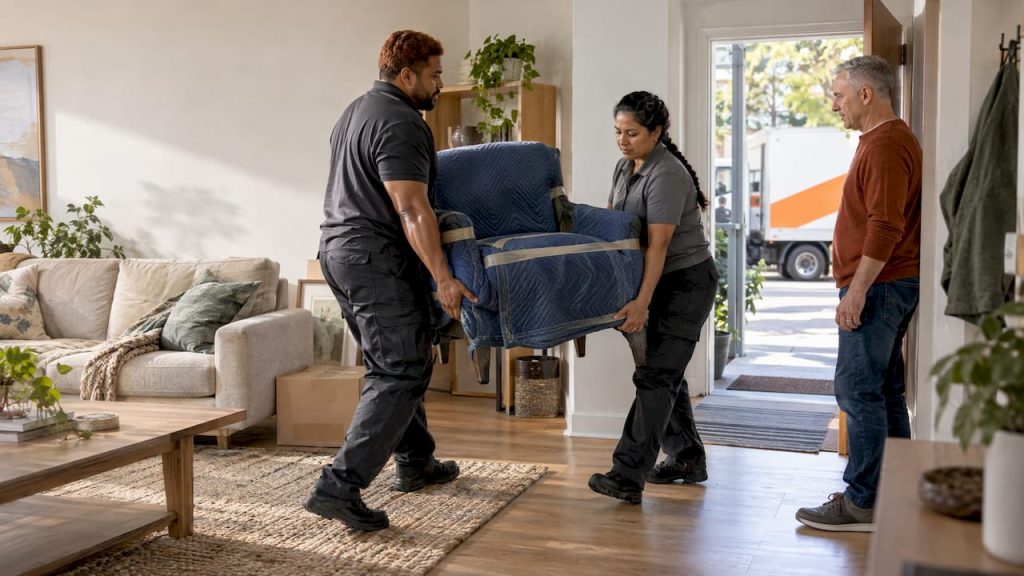
Moving into an apartment goes well when the building, the truck and the utilities are lined up before the first box leaves your old place. The elevator booking, the move-in inspection and a written price from your mover decide most of how the day feels. At Ferguson Moving & Storage, we survey the job and put the guaranteed price in writing before we start, so the one number you worry about is settled early.
Key Takeaways
- Book the building’s moving elevator and your move date first. Ask for the exact window to reserve, because buildings set their own rules.
- Set up utilities and internet before you arrive, and inspect the unit with photos before you unload.
- Budget for more than the moving truck: deposits, supplies and a buffer for surprises.
- Pack an essentials bag and set up the bed, bathroom and kitchen first.
- Ask any mover about valuation protection. The industry standard is 60 cents per pound, and ours is up to $6 per pound.
Table of Contents
- Four to six weeks out: lock in the big pieces
- Budget: what moving into an apartment really costs
- Two to four weeks out: building and utilities
- Packing and sorting
- Moving day, hour by hour
- Your first week in the new apartment
- Promo: a move with one price and one crew
- Perspective: why the plan matters more than the truck
- FAQ
- Sources
Four to six weeks out: lock in the big pieces
Start with your dates. Confirm your move-in date with the landlord or building manager, then book your mover. Tridel’s Toronto move-in guide suggests arranging the move one to two months ahead, because the moving elevator is reserved in 3-hour slots and is in highest demand at the start and end of each month.
If you can, plan an overlap between your old and new places. CMHC notes that paying two rents for a short overlap can be costly, but it gives you more time to pack, move and set up. For a small apartment, even one or two extra days takes pressure off.
Then read your lease again. Note the move-in rules, parking, pets, and what the building expects of movers. Many buildings ask for a deposit or proof of insurance for the elevator booking, so ask early.
Choose how you will move
You have three real options: ask friends, rent a truck, or hire a full-service crew. Friends and a truck work for a studio with little furniture. They get harder with stairs, a long carry from the loading area, or a tight elevator window. If you hire a crew, look for one that gives you a price in writing after seeing the job.
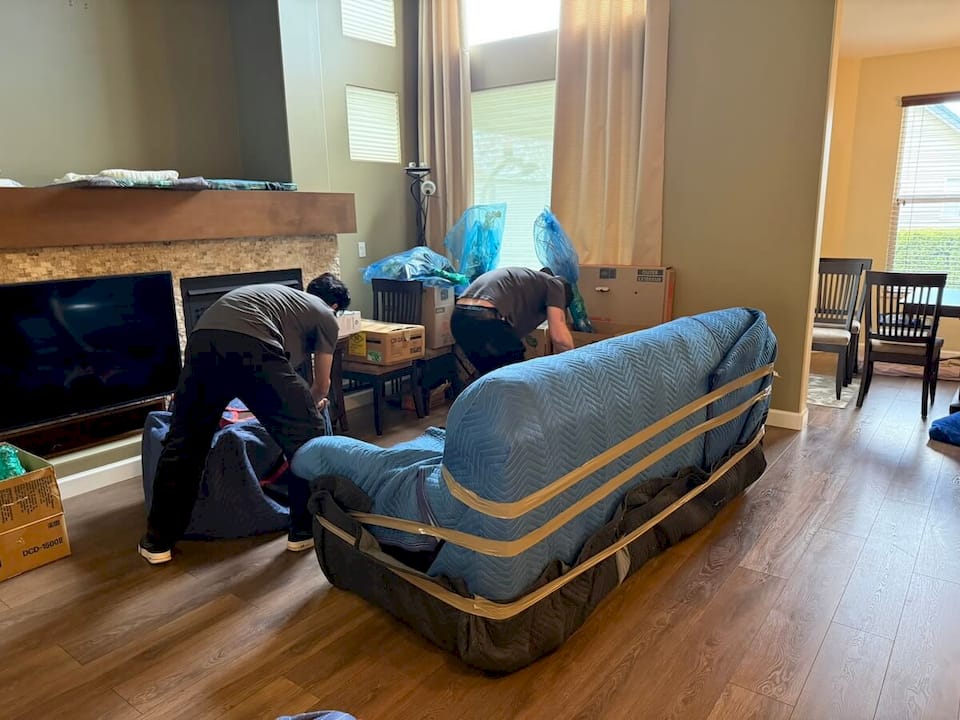
Our crews are our own employees, in our own trucks, so a named person is accountable for your move. We also include live GPS tracking on every move, so you can watch your truck on a map. There is no piano surcharge. If you want to see what a full-service local move looks like, our residential moving page covers it.
Budget: what moving into an apartment really costs
The truck or crew is only part of the bill. The Financial Consumer Agency of Canada lists upfront moving costs such as truck rental, movers, boxes and supplies, and time off work. It also says security deposits generally can’t exceed one month’s rent, and some provinces require a move-in inspection.
Deposit rules differ by province. Check your province’s tenancy body before you hand over money.
A simple budget for your move has these lines:
- Mover or truck rental, plus fuel if you drive it
- Boxes, tape and protection
- Deposit and first month’s rent
- Utility and internet setup fees
- Tenant insurance
- A buffer for the things you did not plan for
On the mover line, ask whether the number is a guaranteed price or an estimate. A flat rate means the total is fixed. An hourly move means the rate and terms are fixed, and the total depends on the hours. We never give a price before a survey, because a price without one is a guess. You can start with a guaranteed price once you have a date.
Do not buy everything at once
You do not need a fully furnished home on day one. Start with bedroom, kitchen and bathroom basics: a bed, sheets, towels, a few pots and plates, cleaning supplies. Add the rest as you notice gaps. Our guide on things to buy before moving helps you sort the must-haves from the later buys.
Two to four weeks out: building and utilities
This is when most move-day problems are either prevented or created.
Elevator and loading. Reserve the service or moving elevator through building management. DASH Property, a Toronto property manager, asks for at least 7 days’ notice, and some buildings want more. We do not book service elevators for you. We tell you the window to reserve, and you book it with the building. Tell management the time your crew arrives, and ask where the truck can park or load.
Also ask about:
- Which entrance and elevator the crew can use
- Whether floors and walls need protection pads
- Key or fob pickup, and who meets you with them
- Move-in hours, since many buildings restrict weekends or evenings
If anyone in your household needs an accessible entrance, ask the building which door and route to use, and tell your mover at the survey.
Parking. The Office of Consumer Affairs advises arranging street parking and telling the landlord or building manager when the movers will arrive. In a busy downtown block, ask your city about a temporary parking permit.
Utilities and internet. CMHC advises having utilities hooked up on arrival. Bridgeway Property Management suggests contacting providers at least five business days before you take occupancy. Internet installs can take longer, so book that first. Ask the landlord whether any accounts can be transferred.
Packing and sorting
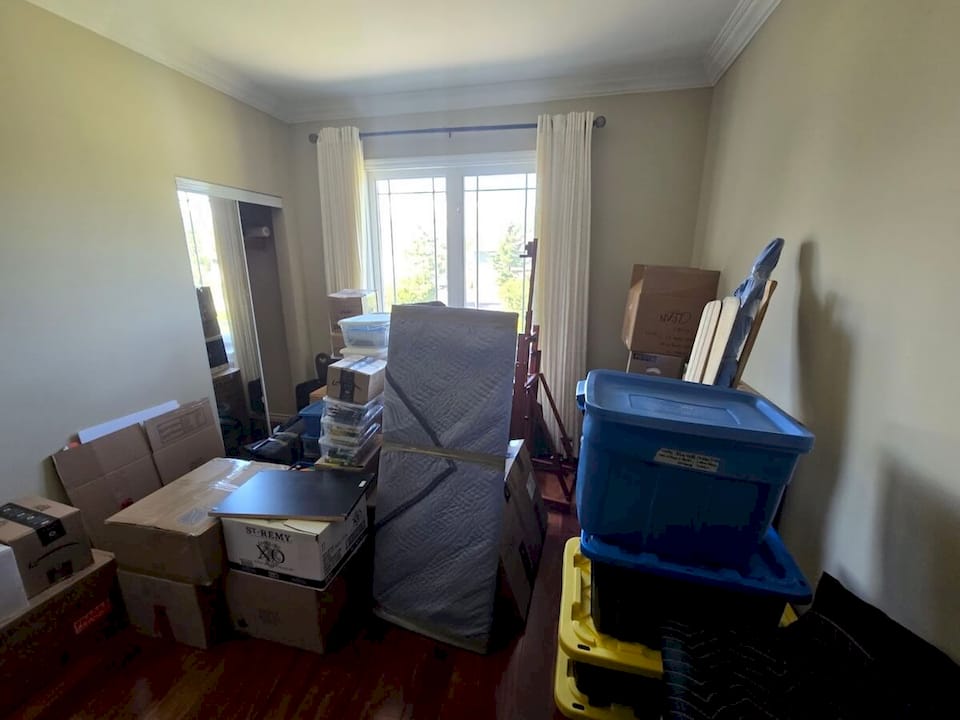
Sort first, then pack. Anything you have not used in a year is a candidate to sell, donate or leave behind. Fewer boxes means a shorter day, and in an apartment a shorter day means less time holding the elevator.
A few rules keep the unpacking easy:
- Pack the things you use least first.
- Label each box with its room and a short list of contents.
- Number boxes and keep a simple inventory. CMHC recommends this, and it helps if something goes missing.
- Keep heavy items in small boxes and soft items in large ones.
- Photograph valuables and the back of your TV and electronics setup before you unplug it.
Our packing tips and five-step packing guide go deeper, and the clothing guide is here. If you would rather not pack at all, our packing services cover it. For a small apartment, a one bedroom packing kit gives you the boxes and materials in one order. Larger homes have two bedroom and three bedroom kits.
Protect what matters
This is the part many people skip. The Office of Consumer Affairs says that without replacement value protection, a mover’s liability is generally $0.60 per pound per item. That is the industry standard. A 20-pound television would be covered for $12.
Our valuation protection is up to $6 per pound as standard. It is valuation protection, not insurance, and it is not a flat $6 per pound. The same page notes that damage claims often must be made within 30 days for local moves and 60 days for long-distance moves, so check your belongings soon after the move. Carry jewellery, documents and medication yourself.
Between homes: storage
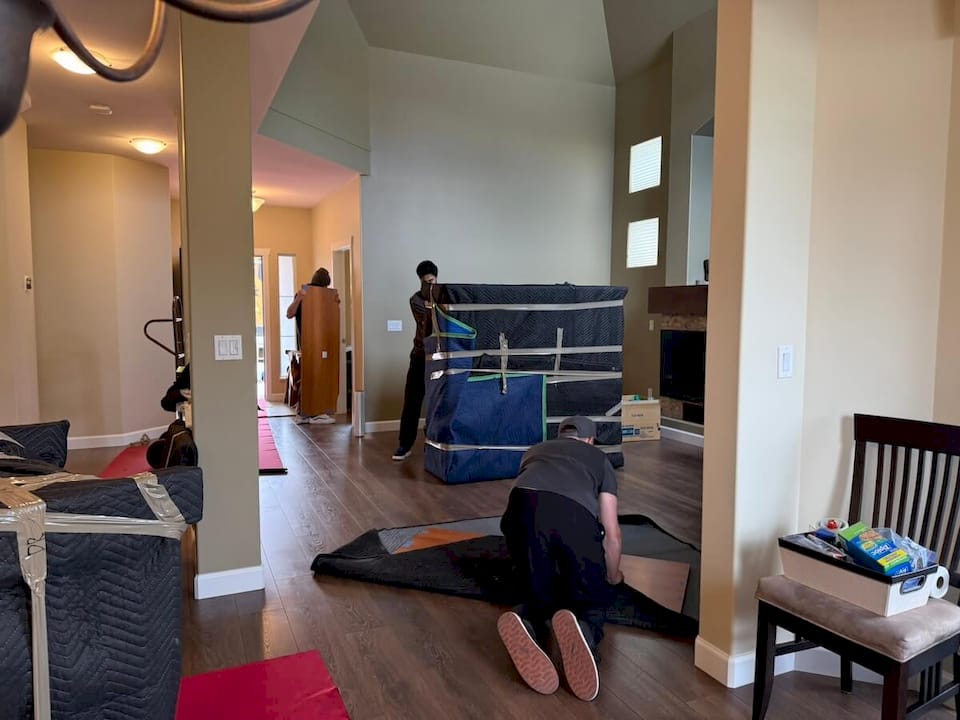
Sometimes the keys do not line up. If you need a place for your belongings for a few days or months, our storage services are there for that. Whatever you choose, the Office of Consumer Affairs suggests asking whether the facility is heated in winter and moving heat- or cold-sensitive items such as candles, medication and cleaning products yourself.
Moving day, hour by hour
Have everything packed and ready before the crew arrives. The Office of Consumer Affairs warns you may be charged for waiting time if you are not ready.
- Morning. Pick up keys and fobs. Confirm your elevator window. Put your essentials bag in your own car or keep it with you.
- Before unloading. Walk the new unit with your phone. Photograph and video every room and any existing damage. Test lights, taps, toilets, appliances and heat. Test the smoke and carbon monoxide detectors. CMHC notes that some provinces require a signed condition worksheet by law. Send the landlord any issues in writing that day, with photos.
- Loading at the old place. Walk through each room, cupboard and drawer for a last check. Ask the crew to protect floors and elevator walls.
- Unloading. Stand near the door and point boxes to their rooms. Large furniture goes first, then boxes, so pathways stay clear.
- Watch the truck. With us, live GPS tracking lets you see where the truck is while you finish at the other end.
What to unpack first
Set up the bed, unpack toiletries and get the kitchen working. Those three things mean you can sleep, wash and eat the first night. Then go room by room. Our unpacking tips show a sensible order.
Your essentials bag should hold:
- Phone charger, medication and ID
- Toilet paper, soap and a towel
- Bedding and a change of clothes
- Kettle or coffee gear, a plate, a mug and cutlery
- Basic tools, light bulbs and cleaning supplies
- Keys, fobs and your lease paperwork
Your first week in the new apartment
Once the boxes are in, handle the paperwork. DASH Property suggests changing your address with Canada Post and the tax agency, and updating your driver’s licence, health card, insurance, bank, employer and subscriptions. Set up Canada Post mail forwarding as soon as you have the date.
Then:
- Buy tenant insurance if you have not already.
- Find the fire extinguisher, the water shut-off and the power panel.
- Read the building rules about garbage, recycling, noise and package delivery.
- Keep your photos and written report to the landlord. You will want them at the end of the tenancy.
Promo: a move with one price and one crew
If you want the day to run without surprises, we can help. We survey your move, put the guaranteed price in writing before we start, and send our own employees in our own trucks. Valuation protection up to $6 per pound is standard, and live GPS tracking is included on every move.

See our residential moving services for local, long distance and condo and apartment moves, or get a guaranteed price for your date.
Perspective: why the plan matters more than the truck
We have moved Canadians since 1916, and the apartment moves that go well share one thing: somebody did the small calls early. They asked the building for the elevator window. They told the crew where to park. They knew the price before the day.
That is why we survey every job and put the price in writing before we start. A flat rate means the total is fixed. An hourly move means the rate and terms are fixed and the total depends on the hours. We never blur the two.
When something goes wrong in a building with a 3-hour elevator slot, you need a person who is accountable. Our crews are our employees, in our trucks, and you can watch your truck on a map. Valuation protection up to $6 per pound is standard, where the industry standard is 60 cents. We say it plainly: it is valuation protection, not insurance.
For a long distance move into an apartment, we give you two options. Ferguson-hauled is a guaranteed flat rate with our own dedicated crew and truck and an exact scheduled delivery date. Great Canadian Van Lines, where we act as a van line agent, is priced on scaled weight and distance, typically about 20 percent less, with a delivery window of 3 to 7 days.
Our long distance moving checklist covers that route.
Lorne MacInnes
FAQ
How much money should you have to move into a new apartment?
Plan for the first month’s rent, any deposit, movers or a truck, supplies, utility setup and a buffer. The Financial Consumer Agency of Canada says deposits generally can’t exceed one month’s rent. Rules vary by province, so check your provincial tenancy body.
What should you move into a new apartment first?
Start with your essentials bag, then the bed, bathroom items and kitchen basics. That gives you somewhere to sleep, wash and eat the first night. Everything else can go room by room afterward.
How far ahead should you book the elevator?
Ask building management as soon as you have your date. One Toronto property manager asks for at least 7 days, and a Toronto developer’s guide says slots are busiest at the start and end of the month. We tell you the window to reserve, and you book it with the building.
How can you move into an apartment quickly?
Pack by room with labels, book the elevator and parking ahead, and have the crew arrive when your window opens. A smaller load also moves faster, so sort and donate first. Being ready at the door avoids waiting charges.
Does a mover’s coverage pay for the full value of your things?
Not by default. Without replacement value protection, liability is generally $0.60 per pound per item. Ours is valuation protection up to $6 per pound, which is not insurance and not a flat $6 per pound.
Moving Canadians since 1916.
Sources
- Moving Day, CMHC
- Renting an apartment or house, Canada.ca
- Moving advice, Office of Consumer Affairs
- Your move-in guide, Tridel
- Tenant FAQs, DASH Property
- Move-in/Move-out Checklist, Bridgeway Property Management